created 2026-10-03
meshcore
meshcore is a LoRa-based mesh networking protocol and software project designed for low power off-grid text communication, therefore not depending on cellular networks.
if you're a meshcore user in south wales or in nearby areas of england, you can reach me by adding my public key as a contact and sending me a dm. i can also be found lurking on the #walesandwest-chat, or #sa (swansea) channel.

my meshcore link. you can also click here.
if you're not already a meshcore user, and it's something you'd be interested in, a good way to get started is to pick up an inexpensive LoRa node and pair it via bluetooth to your smartphone or computer. this one is listed as $17.90 and should do the trick. for a standalone node, you could look at the LilyGo T-Deck Plus, which resembles a blackberry phone, and is the device i started out with.
keep in mind that the LoRa radio frequency varies by region, with the UK and EU being 868 mhz. make sure the antenna you pick is tuned for the correct frequency for best results
meshtastic
another protocol that uses the LoRa frequency (and runs on the same hardware) is meshtastic. it's viewed as a direct competitor to meshcore, but i don't think this is strictly true. i gave meshtastic a try, and wasn't able to connect with too many others. meshtastic messages are limited to 7 hops, which limits their reach.
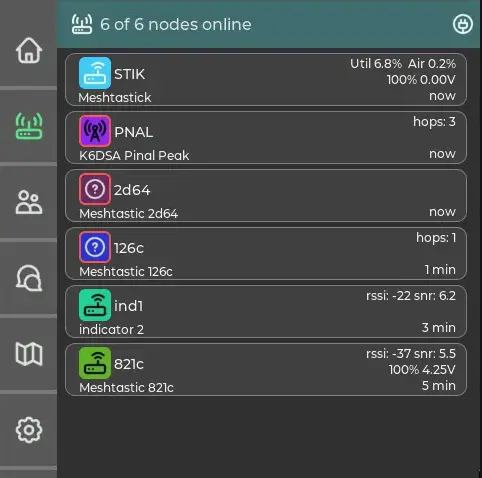
an example screenshot of the meshtastic ui from the meshtastic.org docs
i'd probably use meshtastic if i was going exploring with friends in an area with no mobile coverage, or if i was deploying a sensor network around my home or village. mesh core is much better suited to chatting.
things to know as a beginner
meshcore, meshtastic, and other LoRa projects are still in their relative infancy. there are caveats, gotchas, and ongoing 'drama' that certainly impacted my experience as a newcomer
one thing that immediately threw me after i purchased my t-deck was the variety of firmwares available. the way you load firmware onto a LoRa node is by going to the website of the firmware in question, and using the 'flasher' tool to write to the node's onboard memory. this is done using some html5 wizardry that allows browsers to write to serial connections
the first thing i did when trying meshcore was to google 'meshcore', click the first result, and flash away. the first result on google was meshcore.co.uk, which makes sense since i'm based in the uk. my t-deck then booted into a pretty and polished user interface that was relatively intuitive to use. so far so good.
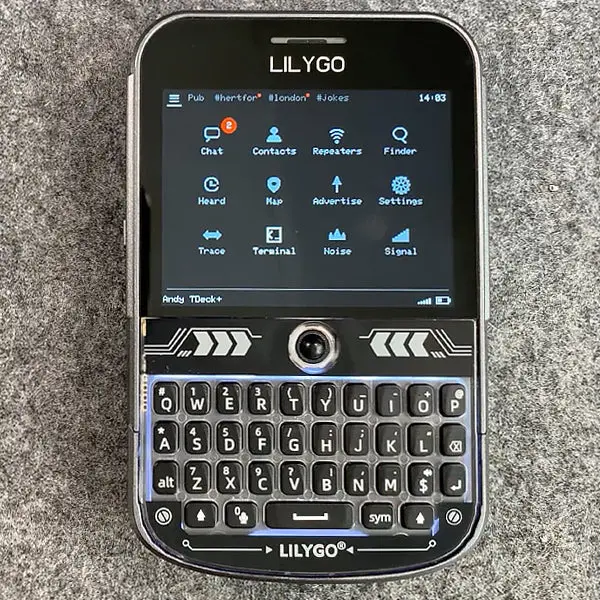
meshOS from meshcore.co.uk running on a t-deck
the meshcore.co.uk website is owned and operated by one of the meshcore project team who appears to have split with the original group to pursue commercial opportunities within the LoRa space. for those who remember cyanogenmod and its fate, it feels very much akin to that.
my personal preference is to stay away from these sorts of projects, so i had a look around for other t-deck firmware options. the 'official' meshcore.io website offered 'ripple' firmware, but i found that to be unintuitive and clunky to use.
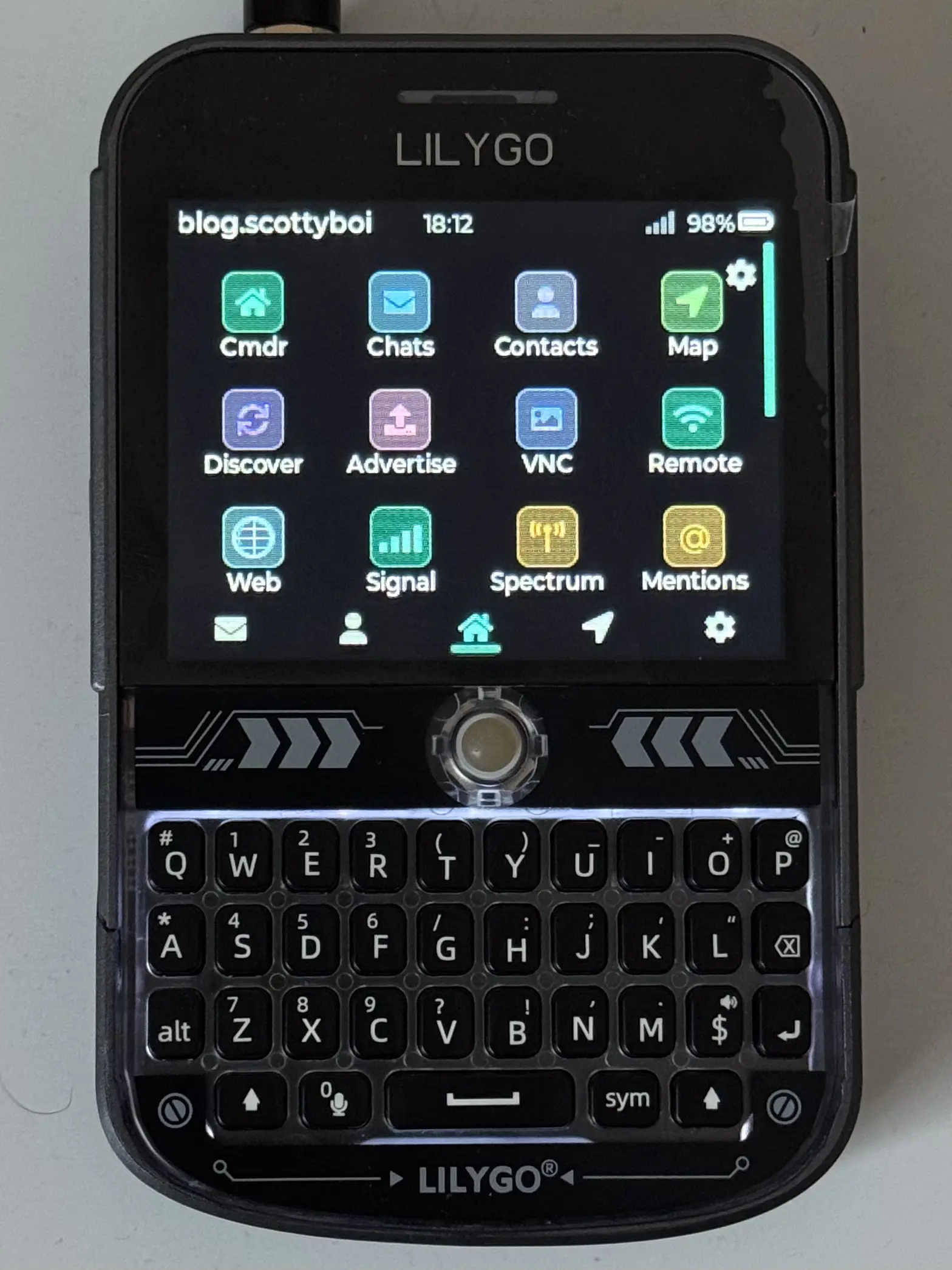
wadamesh running on my t-deck
eventually i stumbled upon wadamesh which, while still in beta, is incredibly intuitive to use. it's packed full of features and under-the-hood innovations. if you own a t-deck, i'd recommend checking it out.
my experience
when my t-deck first arrived, i was frankly disappointed with the lack of contact i was making with others. the only way i was able to pick up a signal was to go to the seaside (signals travel very well over open water) or go up to the top of a nearby mountain.
while these trips proved to be fun adventures at first, they soon became tiresome, and my t-deck went back in its box for the next few weeks. eventually, i decided to shell out £90 for a solar-powered LoRa node, which i strategically positioned to be high enough to look out over the town, providing local coverage. it also has line-of-sight to other repeater sites across the sea, linking us to nearby towns and the wider mesh.
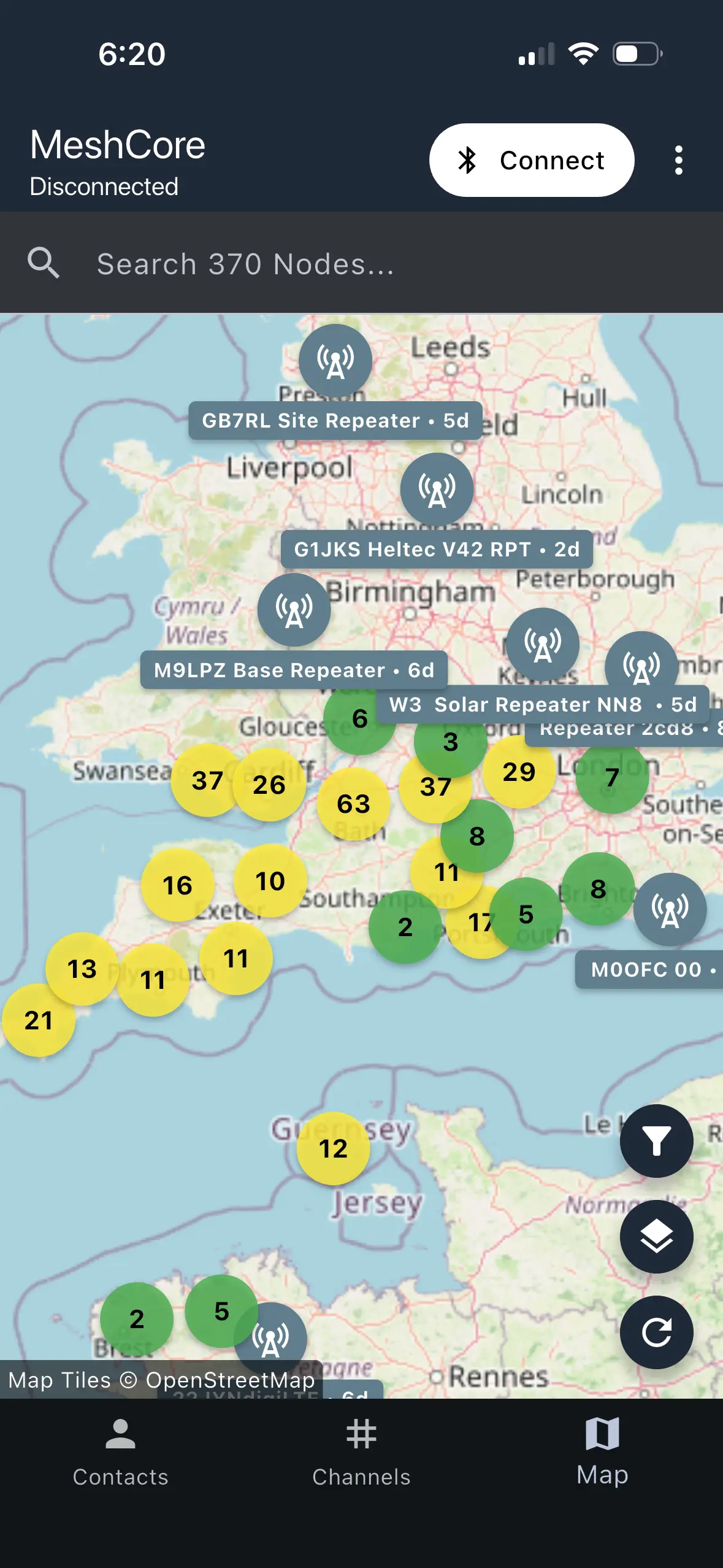
my map of discovered meshcore nodes and repeaters. we even reach into france!
this was a big success, and i can now comfortably receive meshcore messages at home. not only this, but i've received messages from others telling me my repeater is helping them get connected to the wider meshcore network. splendid :)
what's the point?
the argument for meshcore is that, in the event of a grid blackout, people will still be able to communicate. frankly, if we had a large-scale power outage in the uk, the last thing i would be thinking about is picking up my t-deck and texting my fellow radio nerds.
which leads me to my next question - who is using meshcore? at the moment, there seems to be three camps emerging. the first group appears to be nerds who enjoy tinkering with radio gadgets and gizmos, which happens to include me. the second group appears to be preppers, who may also be stocking up on food supplies, and nuke-proofing their homes. the third group appears to be 'free-speech absolutists' who enjoy the decentralised nature of the mesh.
what this means is that chatter on the #public channel tends to be repetitive, self-referential meta-chat about how many 'hops' away people heard each other from, what nodes they are using, and which particular group of individuals will ultimately be responsible for the demise of society.
i believe that a protocol can be considered successful only when it is adopted by people who aren't simply using it to talk about the protocol itself. e-mail, for instance, is used every day by people who don't know or care what SMTP is. meshcore has not yet achieved this, and it's hard to see that it ever will.
having said that, i will continue to participate in meshcore for at least the near future. as mentioned, if you live nearby or you're visiting south wales, feel free to fling me a DM. hope to see you on the mesh!